Travel Lift
Mobile Travel Lift Solutions for Multi-Size Vessel Handling
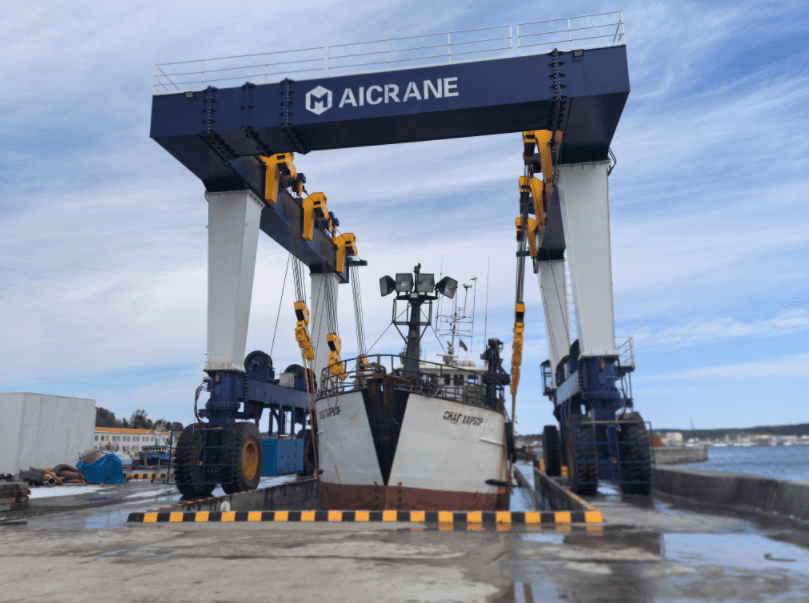
In modern shipyards, marinas, and boat maintenance facilities, operational flexibility is no longer optional—it is a core requirement. Vessels vary significantly in size, weight, hull geometry, and maintenance needs. From small fishing boats to large luxury yachts and commercial vessels, facilities must be capable of handling multiple vessel types efficiently and safely. This is where mobile travel lift solutions for multi-size vessel handling play a critical role.
A mobile travel lift (also known as a boat hoist or marine travel lift) is a rubber-tyred gantry system designed to lift, transport, and launch vessels in and out of the water. Unlike fixed lifting systems, mobile travel lifts provide high maneuverability and adaptability, making them ideal for shipyards dealing with diverse fleets.
This article explores the design principles, technical advantages, operational flexibility, and engineering innovations behind mobile travel lift systems for multi-size vessel handling.
1. What Is a Mobile Travel Lift System?
A mobile travel lift is a specialized gantry crane equipped with:
Rubber-tyred wheels for full-direction movement
Adjustable lifting slings or spreader beams
Hydraulic or electric hoisting systems
Steering mechanisms (multi-mode steering)
Centralized control system for synchronized operation
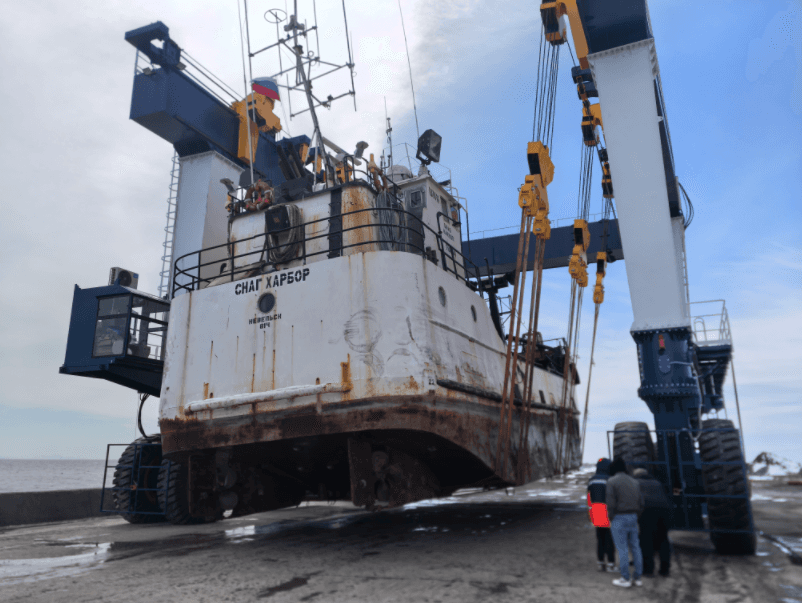
Unlike fixed cranes, mobile travel lifts can move freely within the shipyard, allowing vessels to be transported from dockside to storage yards, maintenance zones, or dry docks.
Their core advantage lies in adaptability, especially in environments where vessel dimensions vary significantly.
2. Challenges in Multi-Size Vessel Handling
Handling multiple vessel sizes presents several engineering and operational challenges:
2.1 Variable Load Distribution
Different vessels have different weight centers. A small boat may weigh 10 tons with a concentrated center of gravity, while a 500-ton yacht may require distributed lifting across multiple points.
2.2 Hull Shape Differences
V-shaped hulls, flat-bottom boats, and catamarans require different sling positioning strategies to avoid deformation or instability.
2.3 Width and Height Variability
Shipyards must accommodate vessels with varying beam widths and mast heights, requiring adjustable gantry span and lifting height capabilities.
2.4 Operational Space Constraints
Limited dockyard space requires precise maneuvering and optimized turning radius for mobile equipment.
3. Key Design Features of Mobile Travel Lift Solutions
Modern mobile travel lift systems are engineered with flexibility in mind. Below are the key design features enabling multi-size vessel handling.
3.1 Adjustable Spreader Beam System
The spreader beam is a critical component that determines lifting flexibility. Advanced systems offer:
Telescopic width adjustment
Multi-point sling positioning
Hydraulic or motorized beam extension
Custom hook spacing for different hull shapes
This ensures safe lifting for both narrow fishing boats and wide catamarans.
3.2 Multi-Wheel Steering System
Mobile travel lifts use advanced steering modes such as:
Straight-line steering
Diagonal movement
360-degree rotation
Crab steering mode
These steering capabilities allow precise positioning even in congested shipyards, improving handling efficiency for vessels of all sizes.
3.3 Hydraulic Synchronization Technology
A key innovation is synchronized hydraulic lifting, where multiple cylinders operate under PLC control to ensure:
Equal load distribution
Stable vertical lifting
Prevention of hull twisting
Smooth lifting and lowering cycles
This is especially important when handling asymmetrical vessels.
3.4 Adjustable Lifting Height and Span
To accommodate various vessel dimensions, mobile travel lifts or boat hoists are designed with:
Customizable lifting heights (often 6m–15m or higher)
Adjustable gantry spans
Modular frame extensions for future capacity upgrades
This flexibility allows shipyards to expand operations without replacing core equipment.
4. Intelligent Control Systems for Multi-Size Operations
Modern mobile travel lifts rely heavily on automation and intelligent control systems.
4.1 PLC-Based Control Architecture
Programmable Logic Controllers (PLC) coordinate:
Lifting synchronization
Wheel movement
Steering modes
Safety interlocks
This ensures precise and repeatable operations across different vessel types.
4.2 Load Monitoring Systems
Integrated load sensors continuously measure:
Total lifted weight
Individual sling tension
Center of gravity shift
If imbalance is detected, the system automatically adjusts lifting speed or halts operation.
4.3 Anti-Sway Control
To improve safety during lifting and transport, anti-sway systems reduce load oscillation by adjusting motion parameters in real time. This is essential for:
Large yachts
High center-of-gravity vessels
Wind-exposed dock operations
4.4 Smart Positioning Technology
Advanced positioning systems use encoders and sensors to ensure precise alignment during:
Vessel pickup from water
Transport across yard
Placement into maintenance zones
5. Safety Engineering in Multi-Size Vessel Handling
Safety is a fundamental requirement in marine lifting operations. Mobile travel lifts integrate multiple safety systems:
5.1 Overload Protection
Automatically prevents lifting beyond rated capacity.
5.2 Emergency Braking Systems
Hydraulic and mechanical brakes ensure controlled stopping in case of failure.
5.3 Wind Load Compensation
Adjusts lifting and movement parameters under high wind conditions.
5.4 Structural Reinforcement Design
High-strength steel frames are engineered to handle dynamic stress variations from different vessel sizes.
5.5 Redundant Control Systems
Backup PLC and hydraulic circuits ensure safe operation even if primary systems fail.
6. Operational Benefits of Mobile Travel Lifts for Multi-Size Fleets
6.1 High Flexibility
One system can handle a wide range of vessel types without modification.
6.2 Reduced Infrastructure Cost
No need for multiple fixed cranes or separate lifting systems.
6.3 Faster Turnaround Time
Vessels can be moved directly from water to maintenance areas in one operation.
6.4 Improved Yard Efficiency
Optimized space usage through mobile transportation capability.
6.5 Scalable Capacity
Systems can be designed or upgraded to handle increasing vessel sizes over time.
7. Applications in Modern Shipyards and Marinas
Mobile travel lifts are widely used in:
Commercial shipyards
Yacht maintenance facilities
Fishing vessel repair docks
Naval support bases
Marina operations
Offshore equipment maintenance zones
Their adaptability makes them particularly valuable in mixed-fleet environments where vessel diversity is high.
8. Future Trends in Mobile Travel Lift Technology
The future of mobile travel lift systems is moving toward smarter, greener, and more automated solutions:
8.1 Electrification and Hybrid Drives
Reducing fuel consumption and carbon emissions in dockyard operations.
8.2 AI-Based Load Prediction
Artificial intelligence used to predict optimal sling positions based on vessel type.
8.3 Digital Twin Simulation
Virtual modeling of lifting operations before execution to reduce risk.
8.4 Fully Autonomous Yard Movement
Semi-automatic navigation systems for reduced operator workload.
8.5 Advanced Materials
Use of lightweight, high-strength alloys for improved structural efficiency.
Conclusion
Mobile travel lift solutions for multi-size vessel handling represent a critical advancement in modern marine engineering. Their ability to adapt to different vessel dimensions, combined with intelligent control systems and robust structural design, makes them indispensable in today’s shipyard operations.
By integrating flexibility, safety, and automation, these systems not only improve operational efficiency but also reduce long-term costs and increase productivity. As maritime industries continue to evolve, mobile travel lifts will play an increasingly important role in shaping the future of vessel handling and maintenance infrastructure.