Overhead Crane
Key Technical Requirements for Double Girder Overhead Cranes in Precast Concrete Plants
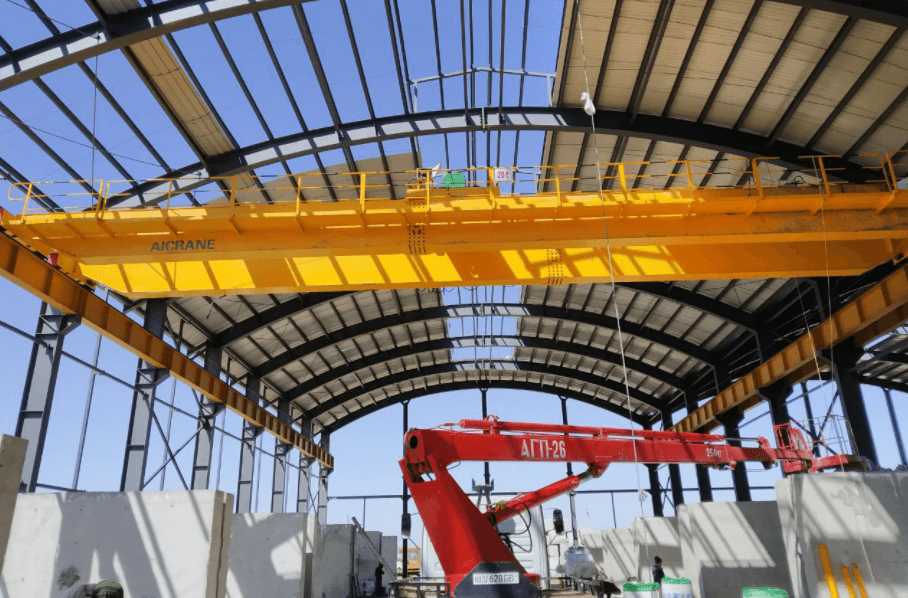
Double girder overhead cranes are the backbone of material handling systems in modern precast concrete plants. These cranes are responsible for lifting, transporting, and positioning extremely heavy and oversized concrete elements such as beams, slabs, columns, wall panels, and bridge segments. Because precast production environments are highly demanding—combining heavy loads, frequent lifting cycles, and harsh working conditions—the technical requirements for these cranes must be carefully defined to ensure safety, productivity, and long-term reliability.
This article outlines the key technical requirements that must be considered when selecting or designing a double girder overhead crane for precast concrete applications.
1. High Load Capacity with Safety Margin
One of the most fundamental requirements in precast plants is sufficient load capacity. Double girder overhead cranes typically handle loads ranging from 10 tons to over 200 tons, depending on the production scale.
However, in precast applications, it is not enough to match only the nominal weight of the concrete elements. Engineers must also consider:
Mold sticking weight during demolding
Embedded lifting devices and rigging weight
Dynamic lifting forces during acceleration and braking
Safety factor (typically 1.25 to 1.5 depending on design codes)
For example, if a precast beam weighs 60 tons, the crane should not only be rated for 60 tons but ideally 70–80 tons to ensure safe and stable operation.
2. Heavy Duty Work Classification (FEM/ISO Duty Rating)
Precast plants operate continuously with high-frequency lifting cycles. Therefore, cranes must be designed for heavy-duty classifications such as:
FEM: A5 to A7
ISO: M5 to M7
A higher duty class ensures:
Longer service life of mechanical components
Reduced wear on hoisting mechanisms
Better resistance to fatigue stress
Stable performance under continuous operation
A crane with a low duty rating may fail prematurely in a precast environment due to repetitive stress and overload conditions.
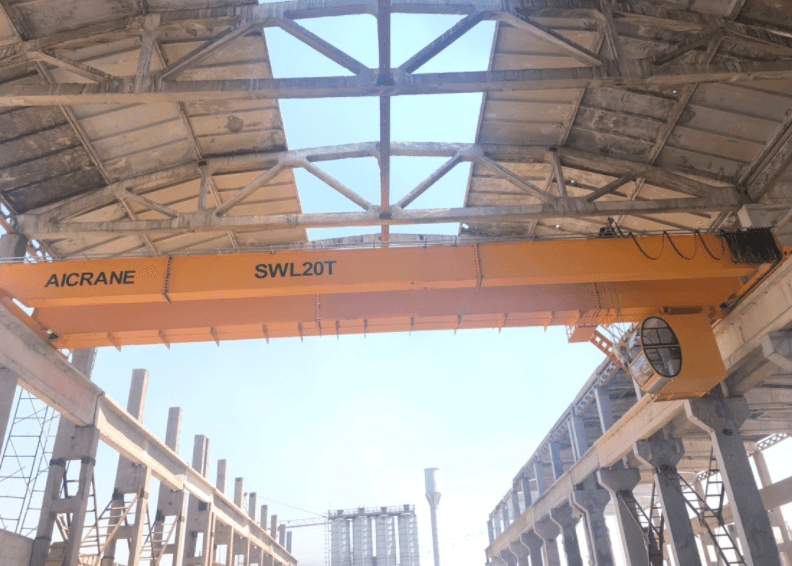
3. Precision Hoisting System
Precise load positioning is essential when handling precast concrete components. Even minor misalignment can damage molds or cause safety hazards.
Key requirements include:
Dual-speed or variable frequency drive (VFD) hoisting system
Micro-speed control for final positioning
Anti-sway technology to reduce load oscillation
Smooth acceleration and deceleration curves
Modern cranes often use inverter-controlled motors to ensure precise control, reducing impact loads on both the crane and the concrete structure.
4. Large Span and High Lifting Height
Precast plants often require cranes to cover wide production and storage areas. As a result, structural design must support:
Spans typically ranging from 15 m to 40 m or more
Lifting heights from 8 m to over 20 m depending on stacking requirements
Higher lifting height is especially important for:
Multi-layer storage yards
Vertical stacking of precast elements
Loading onto transport vehicles and trailers
The crane structure must maintain rigidity across long spans to prevent deflection that could affect precision and safety.
5. Robust Structural Design for Heavy Industrial Use
Double girder cranes in precast plants must withstand harsh mechanical and environmental conditions, including dust, cement particles, vibration, and moisture.
Key structural requirements include:
High-strength steel girders with optimized box beam design
Reinforced welds with fatigue-resistant connections
Corrosion-resistant coatings (epoxy or polyurethane systems)
Finite element analysis (FEA)-optimized structures for stress distribution
The goal is to ensure long-term structural integrity even under continuous heavy loading cycles.
6. Advanced Safety Systems
Safety is a critical concern in precast operations due to the high weight and size of loads. Essential safety features include:
Overload protection system
Emergency stop systems
Limit switches for hoisting and trolley travel
Anti-collision systems (especially in multi-crane setups)
Buffer systems for end travel protection
Real-time load monitoring display
In addition, some modern systems integrate intelligent diagnostics that alert operators to abnormal conditions before failure occurs.
7. Efficient Trolley and Travel Mechanisms
Smooth movement of both trolley and crane bridge is essential for productivity. Technical requirements include:
Frequency-controlled motors for trolley and bridge travel
Hardened rail wheels for wear resistance
Precision-machined rails for smooth movement
High-quality reducers with low backlash
In precast plants, cranes often travel frequently between production zones and storage yards, so mechanical efficiency directly impacts production speed.
8. Adaptability to Harsh Environmental Conditions
Precast concrete environments are typically exposed to:
Cement dust
High humidity or outdoor conditions
Temperature fluctuations
Heavy vibration from casting operations
Therefore, cranes must be equipped with:
Sealed electrical cabinets (IP55 or higher protection)
Dust-proof motors and components
Weather-resistant coatings
Heating elements in cold regions (optional)
These features ensure stable performance in all working conditions.
9. Intelligent Control and Automation Options
Modern precast plants increasingly adopt automation to improve efficiency and reduce labor dependency. Double girder overhead cranes can be equipped with:
PLC-based control systems
Remote control operation
Semi-automated positioning systems
Integration with MES (Manufacturing Execution Systems)
Load tracking and production data logging
Automation helps reduce human error and improves repeatability in repetitive lifting operations.
10. Ergonomic Operator Cabin Design
For overhead traveling cranes operated manually or semi-automatically, a well-designed operator cabin is essential.
Important features include:
Wide visibility for full working area coverage
Air conditioning and vibration isolation
Ergonomic control panels
Real-time monitoring screens
Safety glass with anti-glare coating
Good cabin design significantly improves operator comfort and reduces fatigue during long shifts.
11. Easy Maintenance and Service Accessibility
Since precast plants operate continuously, maintenance downtime must be minimized. Key design considerations include:
Modular components for easy replacement
Accessible inspection points on girders and trolley
Centralized lubrication systems
Diagnostic software for fault detection
Standardized spare parts for fast replacement
Preventive maintenance is crucial to avoid production delays caused by unexpected crane failures.
12. Compatibility with Precast Production Workflow
Finally, the crane must integrate seamlessly with the overall precast production workflow. This includes:
Compatibility with mold systems and casting beds
Coordination with gantry cranes or yard cranes
Efficient material flow between production and storage zones
Synchronization with curing and demolding cycles
A well-designed crane system becomes part of the production chain rather than just a lifting tool.
Conclusion
Double girder overhead cranes play a central role in precast concrete plants, directly influencing productivity, safety, and production quality. Their technical requirements go far beyond simple lifting capacity. Engineers must consider duty classification, structural strength, precision control systems, environmental adaptability, and intelligent automation features.
By carefully selecting a crane that meets these technical requirements, precast manufacturers can achieve:
Higher production efficiency
Safer lifting operations
Reduced maintenance costs
Longer equipment lifespan
Improved overall workflow integration
In modern precast construction industries, investing in a properly engineered double girder overhead crane is not just an equipment decision—it is a strategic production optimization choice.